Music
Intent, Implementation, Impact Statement - Music
Intent
At St. Ethelbert's, our music curriculum reflects the aims of the National Curriculum by enabling all pupils to perform, listen, compose and evaluate music with growing confidence. Through singing, playing instruments, improvising, composing and active listening, children develop musical knowledge, skills and creativity.
Pupils explore music from a wide range of cultures, traditions and historical periods, helping them understand how music has evolved over time and how it reflects society, faith and culture. We encourage curiosity, creativity and an appreciation of all musical styles, while fostering a lifelong enjoyment of music.
Children take part in regular singing assemblies and have opportunities to learn and perform using instruments such as recorders, trumpets and glockenspiels. Through these experiences, they develop confidence, teamwork and an understanding of music's important role within our school, parish and wider community.
Implementation
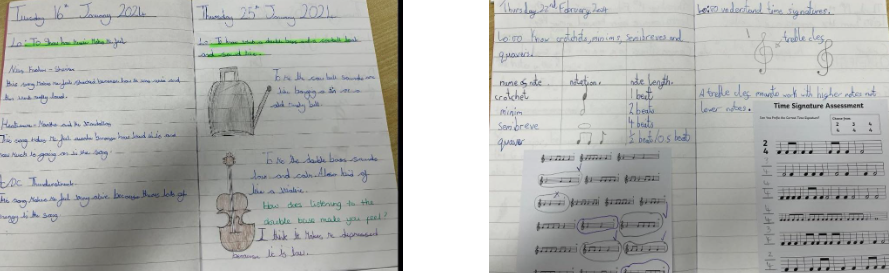
Music is taught through a progressive curriculum that develops pupils' understanding of the interrelated dimensions of music, including pulse, rhythm, pitch, tempo, dynamics, timbre, texture, structure and notation. Lessons provide opportunities to listen, sing, compose, improvise, perform and evaluate across a broad range of musical genres and traditions.
Children study significant composers, musicians and musical traditions from different historical periods and cultures, enabling them to understand the development of music through history. Practical music-making is central to learning, with opportunities to perform individually and as part of an ensemble using voices, body percussion and a range of instruments. Musical learning is further enriched through singing assemblies, concerts, performances, music clubs and specialist music teaching.
Impact
By the time they leave St. Ethelbert's, pupils have developed the knowledge, skills and confidence to perform, compose and respond thoughtfully to music. They use musical vocabulary accurately, recognise how music is organised and communicate their ideas creatively.
Children leave with an appreciation of music from different cultures and historical periods, understanding its significance in society and its contribution to personal expression, worship and celebration. Through regular performance opportunities, they develop resilience, collaboration and self-confidence, while fostering a lifelong appreciation of music and the confidence to participate in musical activities beyond primary school.